The idea is still too broad
I turn the wish list into one sharp first release: the smallest product that solves a real customer problem and is worth paying for.
I turn focused product ideas into polished mobile apps—strategy, UX, engineering, backend, analytics, subscriptions, testing, and store launch, handled by one senior partner.
Early-stage apps rarely fail because nobody can write code. They stall because scope, product, design, engineering, quality, and launch pull in different directions. I keep those decisions in one loop.
I turn the wish list into one sharp first release: the smallest product that solves a real customer problem and is worth paying for.
Product decisions, UX, engineering, backend, analytics, quality, and store delivery stay connected through one accountable partner.
You get a working build early and a clear weekly demo. Decisions happen against the real app, not a slide deck or status report.
Crash reporting, product analytics, subscriptions, feedback loops, and release automation are built in so launch becomes the start of learning.
Speed comes from making fewer, better decisions—not from skipping the details customers notice. I build the first version around the core promise, then add complexity only when the product earns it.
Clarify the customer, core job, business model, and first-release boundary before expensive work begins.
Create a fast, coherent cross-platform app with the native details that make it feel at home on both platforms.
Connect the production services the business needs without building a fragile maze of infrastructure.
Prepare real devices, automated checks, release builds, listings, and post-launch signals for confident shipping.
A short, visible process with useful decisions at every stage. No six-week discovery phase and no black-box build.
We define who the app is for, the painful moment it improves, the one core flow, and what success looks like.
A one-page scope, prioritized flow, risks, and fixed next milestone.
I shape the navigation, core screens, data model, and technical path, then put the first usable build in your hands.
A real build you can tap through and react to.
The product grows around the critical path. Every week ends with a working version, a decision log, and the next highest-value slice.
Core product, backend, analytics, monetization, and release-grade quality.
I harden the app on real devices, prepare both stores, automate releases, and watch the signals that tell us what to improve next.
A focused v1 in customers’ hands. Timing depends on scope and store review.
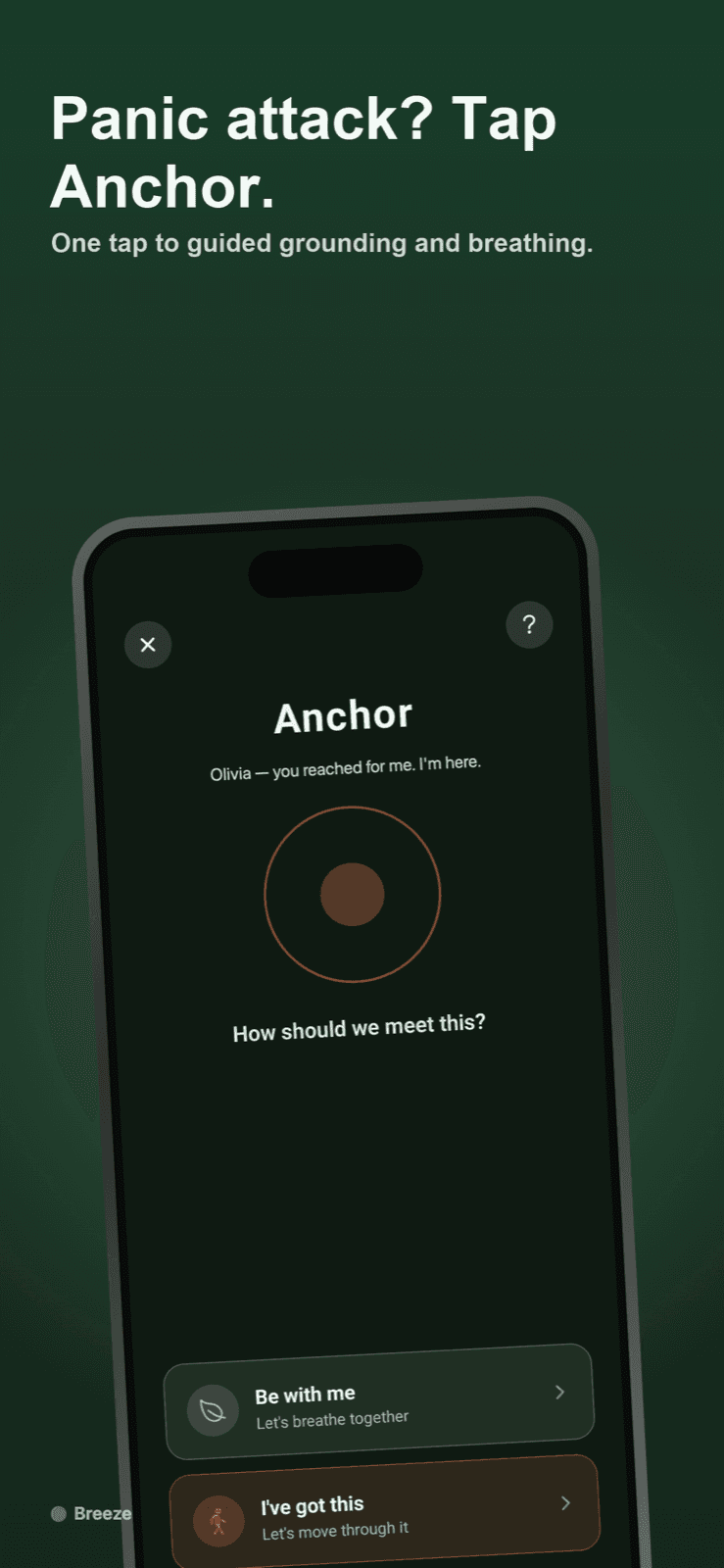
As the solo founder of Breeze, I went from initial commit to a public iOS and Android launch—then built the system needed to keep releasing without chaos.
Every relationship is labeled plainly. “Built” means I created the product or prototype. Client work reflects my exact role in delivery, release, and product quality.
 Built · Open source
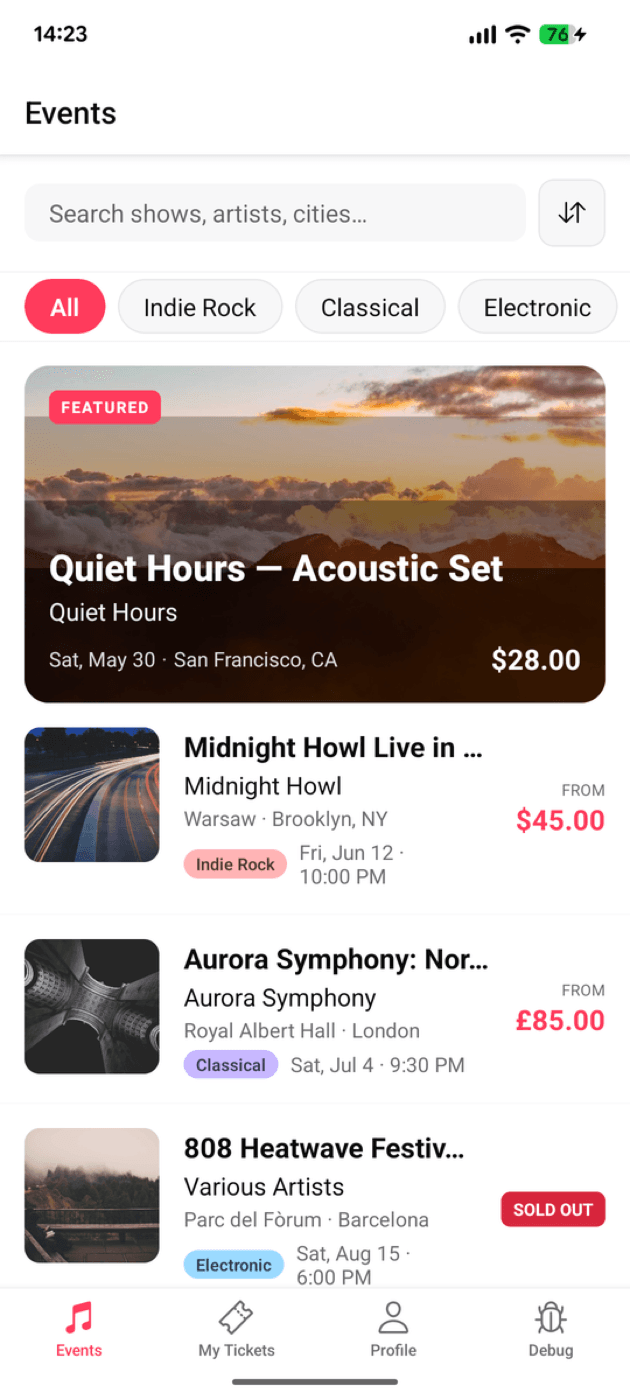
A realistic event-ticketing app built as a mobile automation training playground.
Designed and engineered the iOS/Android app, native bridges, deterministic test states, device-capability demos, deep links, and release artifacts.
A women-first nutrition tracker with optional life-stage modules and a privacy-first product model.
Created the product strategy, positioning, PRD, data model, screen-by-screen build plan, and working clickable reference app.
 Client product · Launch & quality
A Kotlin Multiplatform whole-health app for women, released on iOS and Android.
Owned end-to-end release quality from beta through both stores, including AI health insights, analytics events, push messaging, and real-device automation.
 Client product · Lead QA
A top-rated nutrition app used by more than 8 million customers across iOS, Android, and web.
Led product-quality strategy and release operations; helped double release frequency and reduce production bugs 20% year over year.
 Client product · Fintech
A mobile banking app for managing accounts and buying financial products in one place.
Built and ran mobile regression coverage across Android and iOS, including 20 automated cases and hands-on release testing.
 Client product · Betting exchange
A high-volume peer-to-peer betting exchange with mobile apps and a large API surface.
Created the Appium/Python mobile framework from scratch, automated 30 regression cases, and ran both platforms on real BrowserStack devices in CI.
 Client product · Sportsbook
Sports betting and casino experiences across native mobile and web products.
Led hands-on Android and iOS testing, joined feature planning, and built web automation to find defects earlier in delivery.
Android retail-app purchase flow backed by API checks for login, registration, and product details.
Built a public Appium page-object project for the shopping flow plus Postman coverage for the supporting account and catalog APIs.
 Confidential engagements
Short-cycle mobile and web engagements delivered through Toptal’s vetted talent network.
Worked from exploratory release passes through automation-framework setup while keeping client details under NDA.
“Mate's expertise was critical in transitioning from a loose collection of contractors to a cohesive and synergized engineering team. He implemented practical testing strategies that reduced regressions and elevated our overall code quality.”
This works best for a founder or small product team with a real customer problem, a reachable decision-maker, and the appetite to release a focused first version quickly.
A focused first release can often reach iOS and Android in 4–8 weeks. The honest answer depends on the number of core flows, integrations, content, and store requirements. The first working build arrives much earlier, so you are never waiting weeks to see whether the direction works.
No. A useful customer problem and access to the decision-maker are enough to start. I can turn rough notes, sketches, or an existing workflow into a scoped product, user flows, and a build plan.
Yes. I usually use React Native and Expo for one maintainable product across both platforms, then add Swift or Kotlin where a native integration genuinely needs it.
Yes. My production stack includes Supabase, Apple and Google sign-in, RevenueCat subscriptions, PostHog analytics, Sentry monitoring, notifications, localization, and automated releases.
We use real product and stability data to choose the next release. I can stay on for iteration and release ownership or hand over a documented codebase, delivery pipeline, and prioritized roadmap to your team.
In 30 minutes, we'll identify the smallest valuable first release, the biggest delivery risk, and whether I'm the right person to build it with you.
No pitch deck required. Rough notes are welcome.